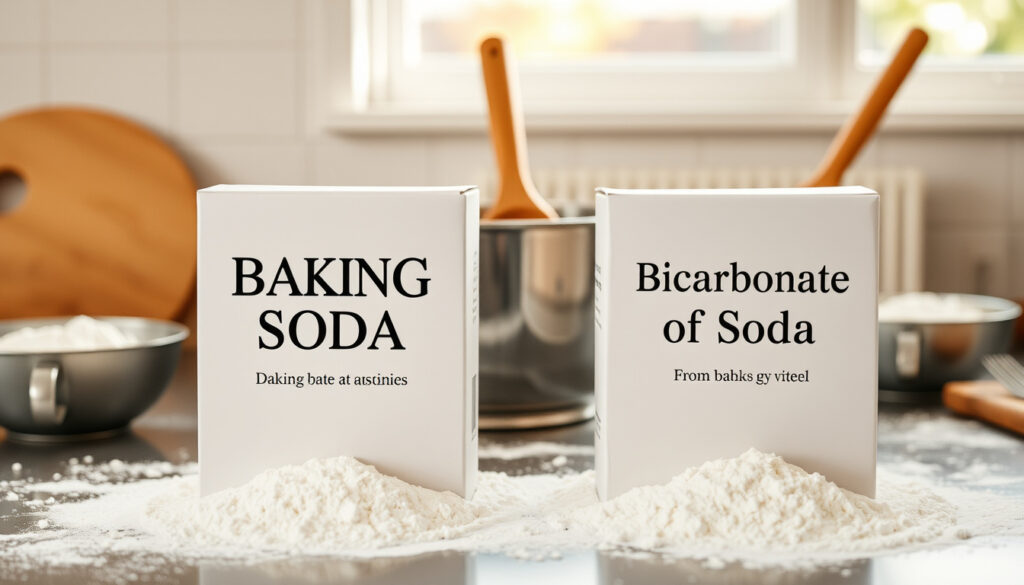
Is Bicarbonate of Soda the Same as Baking Soda – Names, Uses and Key Differences
Is Bicarbonate of Soda the Same as Baking Soda?
Yes—bicarbonate of soda and baking soda are the same product, just called different names in different regions. In the United Kingdom, Australia, and New Zealand, the white powder is labeled as bicarbonate of soda. In the United States, the same substance is sold as baking soda. Both names refer to pure sodium bicarbonate with the chemical formula NaHCO3, a mildly alkaline compound used in baking, cleaning, and personal care applications. The distinction is purely regional terminology, not a difference in the actual product. Understanding this naming convention resolves one of the most common points of confusion when following recipes or cleaning guides from different countries.
Despite their identical chemical composition, these names often cause misunderstandings. A recipe calling for bicarbonate of soda from a British source will work exactly the same as one requesting baking soda from an American publication. The same principle applies to product labels and cleaning instructions found online. Consumers who grasp this simple regional naming difference can confidently substitute one term for the other when shopping or following instructions across international sources.
Quick Reference Overview
Baking soda, bicarb soda, bicarbonate of soda, sodium bicarbonate
NaHCO3
Leavening agent in baking, gentle cleaning, personal care
Identical product with different regional names
Key Insights
- Bicarbonate of soda and baking soda are 100% chemically identical—the names differ by region, not formulation
- Baking powder is fundamentally different: it contains an acid component that bicarbonate of soda lacks
- Soda crystals (sodium carbonate) are much stronger and more alkaline than bicarbonate of soda
- Bicarbonate of soda is safe for food use and gentle enough for kitchen applications
- Baking powder should never be substituted for cleaning purposes due to its starchy residue
- Regional labels like “bicarb soda” are casual abbreviations for the same sodium bicarbonate product
Product Comparison Snapshot
| Term | Region | Composition | Common Use |
|---|---|---|---|
| Baking soda | United States | Sodium bicarbonate | Baking, cleaning |
| Bicarbonate of soda | UK, Australia, NZ | Sodium bicarbonate | Baking, cleaning |
| Soda crystals | UK, Australia | Sodium carbonate | Heavy-duty cleaning |
| Baking powder | Global | Alkali + acid + buffer | Leavening in baking |
What’s the Difference Between Baking Soda, Bicarbonate of Soda, and Baking Powder?
While the names baking soda and bicarbonate of soda refer to the same substance, baking powder is an entirely different product. The confusion arises because all three are used in baking and often appear near each other on supermarket shelves. However, their chemical compositions and functions differ significantly. Bicarbonate of soda is a single compound—a weak base with alkaline properties. Baking powder, by contrast, is a premixed combination of an alkali, an acid, and a buffer designed to produce carbon dioxide gas when moistened.
English inventor Alfred Bird first created baking powder in 1843 to solve a practical problem. Many bakers at the time lacked access to fresh ingredients with natural acids, such as buttermilk or cream of tartar. Bird developed a stable dry mixture that would generate leavening gas when mixed with liquid, regardless of the acidity in the other ingredients. This innovation democratized baking and led to the widespread commercial baking powder products available today.
Baking Powder Composition
Baking powder contains three key ingredients working together. The alkali component—often bicarbonate of soda itself—provides the alkaline base. The acid component generates gas when activated by moisture. The buffer, typically cornflour, prevents premature reactions between the dry acid and alkali during storage. When baking powder is added to wet dough or batter, the acid and alkali components dissolve and react, producing carbon dioxide bubbles that cause the mixture to rise. The cornflour serves a dual purpose: it physically separates the reactive components and absorbs ambient moisture to extend shelf life.
Why Substituting Matters
Understanding these differences prevents costly baking mistakes. A recipe designed for baking powder cannot simply use bicarbonate of soda as a direct replacement unless the other ingredients already contain sufficient acid to trigger the leavening reaction. Conversely, bicarbonate of soda works well when recipes already include acidic ingredients like lemon juice, yogurt, or brown sugar. The typical ratio in baking is approximately one teaspoon of baking powder for every 110 grams of flour, though ratios vary by recipe.
Baking powder should never be used for cleaning purposes. Its cornflour content creates a starchy residue that gums up surfaces and can actually attract dirt and bacteria rather than removing it.
Can You Use Bicarbonate of Soda (Baking Soda) for Cleaning?
Bicarbonate of soda excels as a gentle cleaning agent for numerous household applications. Its mild alkalinity allows it to break down proteins, neutralize acids in odors, and soften water without damaging most surfaces. Unlike harsh chemical cleaners, bicarbonate of soda poses minimal risk to humans and pets when used appropriately, making it particularly valuable in kitchens and areas where food is prepared. Guides on cleaning with bicarbonate of soda frequently recommend it for deodorizing refrigerators, scrubbing sinks, and tackling mild stains on countertops.
The substance works through multiple mechanisms during cleaning. As an alkaline compound, it saponifies fats—turning greasy residues into water-soluble soaps that wipe away easily. It also acts as a gentle abrasive when applied with a damp cloth or brush, helping to scrub away buildup without scratching most surfaces. Additionally, bicarbonate of soda neutralizes acidic odor molecules, effectively eliminating rather than masking unpleasant smells in trash cans, pet areas, and sneakers.
Effective Cleaning Applications
- Deodorizing refrigerators, freezers, and kitchen appliances
- Scrubbing bathroom and kitchen surfaces
- Removing mild stains from countertops and cookware
- Neutralizing odors in trash cans, litter boxes, and pet bedding
- Breaking down protein-based stains before laundering
- Softening water in washing machine applications
- Cleaning delicate surfaces like natural stone countertops
For best results when cleaning with bicarbonate of soda, create a paste by mixing three parts powder with one part water. Apply to surfaces, let sit for 15-20 minutes, then scrub gently and rinse thoroughly.
Is Bicarbonate of Soda Safe for Skin, Teeth, and Edible Uses?
Bicarbonate of soda carries a long history of safe use in food preparation and certain personal care applications. As a food ingredient, it appears in recipes ranging from cookies and cakes to self-raising flour formulations. Medically, it serves as an antacid to treat heartburn and indigestion, providing relief by neutralizing excess stomach acid. Some toothpastes and mouthwashes contain bicarbonate of soda for its mild abrasive qualities and ability to neutralize acid-producing bacteria in the mouth. However, concentration and application method matter significantly when using it for personal care purposes.
Skin Applications
Many people use bicarbonate of soda in DIY skincare routines, particularly in foot baths and as a gentle exfoliant. The substance’s pH of 8-9 makes it mildly alkaline, which can help balance skin’s natural acidity in very dilute solutions. However, frequent or concentrated applications may disrupt the skin’s natural protective barrier, particularly in individuals with sensitive skin. Those with conditions like eczema or psoriasis should exercise caution and consult dermatology resources before regular use.
Oral Care Considerations
The American Dental Association notes that bicarbonate of soda appears in some whitening toothpastes due to its mild abrasive action and ability to neutralize plaque acids. While this occasional use is generally recognized as safe, using pure bicarbonate of soda for brushing is not typically recommended by dental professionals. The abrasive particles may wear down enamel over time if used too frequently or with excessive pressure. Most dental experts advise sticking to products specifically formulated and tested for oral use.
Bicarbonate of soda should not be inhaled as a powder. Always keep the product away from eyes, as it can cause irritation. Store in a cool, dry place away from moisture to preserve its effectiveness.
Is Bicarbonate of Soda the Same as Soda Crystals?
No—bicarbonate of soda and soda crystals are distinctly different products despite their similar names and overlapping availability in British and Australian supermarkets. Bicarbonate of soda (NaHCO3) is a mild alkali with a pH of approximately 8-9. Soda crystals, by contrast, are sodium carbonate decahydrate (Na2CO3) with a pH of 11-12, making them significantly stronger and more alkaline. This difference in alkalinity translates directly into cleaning power and safety considerations.
Soda crystals fall at the caustic end of the pH scale, placing them in a different safety category than bicarbonate of soda. They can break down organic materials and cause chemical burns if mishandled. This strength makes soda crystals particularly effective for heavy-duty cleaning tasks such as removing grease from oven surfaces, unblocking drains, and tackling built-up limescale. However, that same potency requires careful handling, including the use of rubber gloves and good ventilation during use.
When to Use Each Product
Soda crystals work best for aggressive cleaning tasks that require their high alkalinity. Use them for removing heavy grease deposits, softening water in washing machines, unblocking drains, and deep-cleaning tasks that would overwhelm bicarbonate of soda. Bicarbonate of soda is better suited for regular maintenance cleaning, deodorizing, and applications where gentleness matters—including cleaning near food preparation areas or around children and pets.
A recommended approach for thorough cleaning combines both products strategically. Apply soda crystals first to tackle stubborn grime and grease, then follow with a citric acid solution to remove any alkaline residue and restore shine to surfaces. This two-step process leverages each product’s strengths while neutralizing potential residues.
Making Soda Crystals at Home
Home cooks can convert bicarbonate of soda into soda crystals through a process called thermal decomposition. This requires heating bicarbonate of soda in an oven at 200°C for a prolonged period. Layer the powder evenly on a baking tray and heat for anywhere from 15 minutes to one hour, depending on the quantity and oven characteristics. After heating, allow the material to cool completely before transferring it to an airtight container.
The heating process breaks bicarbonate of soda down into soda crystals, water, and carbon dioxide. Both the water and CO2 evaporate during cooking, leaving behind the more concentrated alkaline product. Home-prepared soda crystals work identically to commercially sold versions for cleaning purposes, though the process requires careful attention to temperature and timing. Further details on bicarbonate of soda versus soda crystals can help clarify these differences.
What the Evidence Shows: Facts and Uncertainties
| Established Information | Key Details |
|---|---|
| Bicarbonate of soda and baking soda are identical | Same chemical compound (NaHCO3), different regional names only |
| Baking powder contains bicarbonate of soda | Baking powder uses bicarbonate as its alkali component, combined with acid and cornflour buffer |
| Soda crystals are sodium carbonate | Different chemical (Na2CO3) with significantly higher pH and alkalinity |
| Safety profile differences | Bicarbonate is non-toxic; soda crystals are caustic and require protective handling |
| Cleaning applications | Bicarbonate for gentle cleaning; soda crystals for heavy-duty tasks |
| Areas of Uncertainty | Context |
|---|---|
| Optimal concentration for skin use | Limited clinical research on safe dilutions for topical applications |
| Long-term enamel effects from baking soda toothpaste | Dental research shows mixed results depending on frequency and formulation |
| Exact shelf life when converted to soda crystals at home | Storage conditions significantly affect potency over time |
Understanding Regional Naming Conventions
The naming distinction between bicarbonate of soda and baking soda reflects British English versus American English conventions rather than any actual product difference. British English uses “bicarbonate of soda” as the standard term, reflecting the chemical nomenclature of the period when the product gained popularity in British households. American English adopted “baking soda” as the descriptive common name, emphasizing the product’s role in leavening baked goods.
These regional variations extend beyond English-speaking countries. The same white powder appears under various local names in different markets, but the underlying product remains sodium bicarbonate. Supermarkets in the United Kingdom stock “bicarbonate of soda,” while American stores display “baking soda”—both containing identical pure sodium bicarbonate suitable for the same culinary and cleaning applications.
Sources and Expert Perspectives
“Bicarbonate of soda and baking soda are identical products with different regional names.”
Source: Smol Cleaning Guide
“Both are pure sodium bicarbonate with the chemical formula NaHCO3.”
Source: Laundry Comparison Guide
“Soda crystals are significantly stronger and more alkaline than bicarbonate of soda.”
Source: Bottle and Mix Reference
Summary: Key Takeaways
Bicarbonate of soda and baking soda are the same product—pure sodium bicarbonate sold under different regional names. This identical substance should not be confused with baking powder (which contains additional acid components) or soda crystals (which are sodium carbonate, a stronger alkaline compound). Bicarbonate of soda is safe for food use, personal care applications in moderation, and gentle household cleaning. Soda crystals require careful handling due to their caustic nature. Understanding these distinctions helps consumers follow international recipes, choose appropriate cleaning products, and use these common household items safely and effectively. For further information on related topics, explore guides on washing soda versus baking soda laundry differences.
Frequently Asked Questions
Is bicarbonate of soda the same as baking soda?
Yes, absolutely. Bicarbonate of soda and baking soda are identical products—pure sodium bicarbonate (NaHCO3)—sold under different regional names. British and Commonwealth countries use “bicarbonate of soda,” while the United States uses “baking soda.”
Is baking soda the same as baking powder?
No. Baking powder is a mixture containing bicarbonate of soda as one ingredient, along with an acid component and cornflour buffer. Bicarbonate of soda alone cannot replace baking powder in recipes unless acidic ingredients are already present.
Is soda crystals the same as bicarbonate of soda?
No. Soda crystals are sodium carbonate (Na2CO3), which is chemically distinct and significantly more alkaline than bicarbonate of soda. Soda crystals have a pH of 11-12 compared to bicarbonate’s pH of 8-9.
Is bicarbonate of soda edible?
Yes, bicarbonate of soda is safe for consumption in food quantities. It is used as a leavening agent in baking and can be taken as an antacid for heartburn and indigestion. However, it should not be consumed in large amounts, and soda crystals should never be ingested.
What is bicarbonate of soda used for?
Bicarbonate of soda serves multiple purposes: leavening in baking, gentle cleaning of surfaces, deodorizing refrigerators and fabrics, and personal care applications such as certain toothpastes and foot baths.
What is soda water?
Soda water is carbonated water—water that has been infused with pressurized carbon dioxide gas under pressure. It is unrelated to bicarbonate of soda or soda crystals, though the names share common origins in the word “soda.”
Is baking powder sodium bicarbonate?
Baking powder contains sodium bicarbonate as its alkaline component, but it is not purely sodium bicarbonate. Baking powder is a complete leavening system that also includes an acid component and a buffer (typically cornflour) to prevent premature reaction.
More related posts
 Corn on the Cob – Complete Cooking Guide and Nutrition Facts
 How Old Is Kylie Minogue – Age 57 in 2025 and Key Facts
 DWP Cost of Living Payments – Eligibility Dates and £900 Guide
 Minimum Wage Increa e 2025 – New UK Rate and Key Change
 Sheffield Wednesday vs Leeds United – Preview, H2H and Prediction
 Donald Trump Jr. – Biography Family Career Net Worth
 Faye Marsay Movies and TV Shows – Full Filmography Guide
 Olivia Thirlby – From Juno to Oppenheimer and Beyond