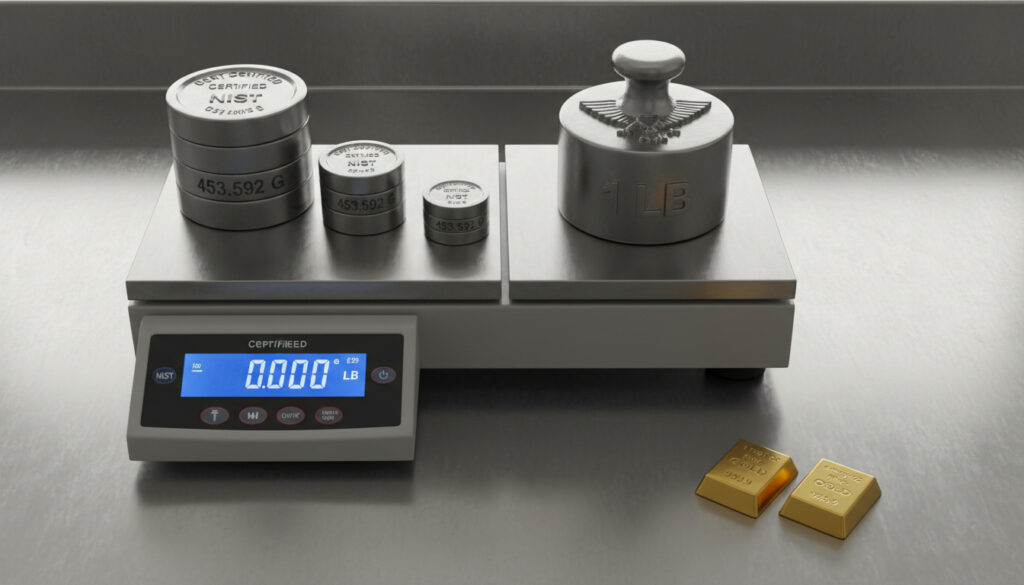
How Many Grams in a Pound – Exact NIST Standards and Troy Differences
The avoirdupois pound, the standard unit for everyday weight measurement in the United States and other customary system countries, equals exactly 453.59237 grams. This precise conversion, established by international agreement in 1959, governs legal trade, shipping, and culinary measurements. A separate troy pound, used exclusively for precious metals, weighs exactly 373.24172 grams.
While the exact figure of 453.59237 grams per pound serves as the legal standard maintained by the National Institute of Standards and Technology (NIST), most practical applications rely on rounded approximations. Cooking recipes frequently call for 454 grams per pound, whereas scientific contexts demand the full precision. Confusion between the avoirdupois and troy systems remains a common source of error in commodities trading and jewelry valuation.
Understanding which pound variant applies to a given situation prevents costly mistakes. The avoirdupois system—with its 16 ounces per pound and 7000 grains total—handles general goods, groceries, and postal items. The troy system, featuring 12 ounces per pound and 5760 grains, persists solely for gold, silver, and gemstones.
How Many Grams Are in a Pound?
453.592 grams (standard for everyday use)
373.242 grams (precious metals only)
1 Pound = 16 Avoirdupois Ounces
grams = pounds × 453.59237
- Use 454g for quick mental math and grocery shopping
- Exact value defined by 1959 international yard and pound agreement
- Avoirdupois system divides 1 pound into 7000 grains exactly
- Troy system divides 1 pound into 5760 grains exactly
- The grain serves as the common base unit across both systems at 0.06479891 grams
- US customary and metric systems overlap at this conversion point
- Cooking recipes typically round to 450-460g per pound for convenience
| Pounds | Grams (exact) | Grams (rounded) |
|---|---|---|
| 0.25 lb | 113.398 | 113 |
| 0.5 lb | 226.796 | 227 |
| 1 lb | 453.592 | 454 |
| 2 lb | 907.185 | 907 |
| 5 lb | 2267.962 | 2268 |
The NIST EPO No. 5 table confirms these figures as legal standards for scale testing and trade verification, advising multiplication by 453.59237 for precision work.
How to Convert Pounds to Grams
Converting pounds to grams requires multiplying the avoirdupois weight by 453.59237. For troy measurements, use 373.24172 instead. The grain unit provides a bridge between systems, with exactly 0.06479891 grams per grain.
The Exact Calculation Method
For laboratory or legal metrology purposes, apply the exact multiplier: mass in grams equals mass in pounds multiplied by 453.59237. This formula derives from the 1959 international agreement that standardized the yard at 0.9144 meters and the pound at 0.45359237 kilograms exactly.
Quick Reference Charts
Practical applications often tolerate minor rounding errors. Online conversion tools automate these calculations, but manual charts remain essential for fieldwork and kitchen environments without digital access.
For Class I-III scale testing, NIST Handbook 44 permits rounding to 0.001g, but always multiply by 453.59237 g/lb first, then round the final result to minimize cumulative error.
How Many Grams in Common Pound Amounts?
Specific quantities frequently encountered in commerce and cooking require precise translation. Half-pound packages, two-pound bulk items, and 500-gram metric equivalents generate particular confusion.
How Many Grams in 2 Pounds?
Two avoirdupois pounds equal exactly 907.18474 grams. Rounded to the nearest whole gram, this becomes 907g. In troy weight, two pounds would equal 746.48344 grams, though such measurements rarely appear outside precious metals markets.
Is 500 Grams Half a Pound?
No. Half an avoirdupois pound equals exactly 226.796 grams. Five hundred grams represents approximately 1.10231 pounds—slightly more than one pound. This distinction matters critically in pharmaceutical and scientific contexts where 500g standards are common.
Never assume “pound” without specifying avoirdupois or troy. A troy ounce is approximately 9.7% heavier than an avoirdupois ounce, while a troy pound is significantly lighter than an avoirdupois pound due to its 12-ounce structure versus 16 ounces.
Grams in an Ounce and Related Units
Understanding ounce-to-gram conversions prevents errors when scaling recipes or evaluating commodities. The distinction between avoirdupois and troy ounces generates particular confusion among consumers.
How Many Grams in an Ounce?
One avoirdupois ounce equals exactly 28.349523125 grams, derived from 437.5 grains multiplied by 0.06479891 grams per grain. One troy ounce equals exactly 31.1034768 grams, calculated from 480 grains. Conversion studies confirm these figures for educational reference.
How Many Kilograms in a Pound?
One avoirdupois pound equals exactly 0.45359237 kilograms. This decimal representation simplifies metric system integration, placing the pound at just under half a kilogram.
Culinary conversion charts recommend using 28.35g per avoirdupois ounce and 453.6g per pound for recipe scaling. No troy units belong in kitchen measurements.
When Did the Pound Become Standardized?
-
The troy weight system originates at trade fairs in Troyes, France, designed for precious metals.
-
England standardizes the avoirdupois pound for general commodities, establishing 16 ounces and 7000 grains.
-
The United States and Commonwealth nations adopt the international yard and pound agreement, defining the avoirdupois pound as exactly 0.45359237 kilograms. If you’re looking for protection for your device, you can find the best iPhone 13 Pro cases.
-
The UK Weights and Measures Act limits troy weight to precious metals exclusively.
-
NIST Handbook 44 continues to govern these standards for legal metrology in the United States.
What Is Certain About Pound Conversions?
Established Facts
- 1 avoirdupois lb = 453.59237g exactly (NIST standard)
- 1 troy lb = 373.24172g exactly
- 1 grain = 0.06479891g exact base unit
- Avoirdupois: 7000 grains/lb; Troy: 5760 grains/lb
Context-Dependent Variations
- Retail rounding practices (453.6g vs 454g)
- Kitchen scale precision limitations
- Regional customary usage patterns
Why Do Two Pound Standards Exist?
The dual system reflects historical trade specializations. Avoirdupois weight, from the Old French “aveir de peis” (goods of weight), emerged in medieval Europe for general merchandise. Its 16-ounce structure facilitated binary division for commerce in wool and agricultural products.
Troy weight developed earlier for currency and bullion, requiring finer divisions. Its 12-ounce pound allowed divisible apportionment of precious metals among 12 Can Dogs Have Paracetamol Toxicity Risks without fractional complexity. The Roman libra, ancestor to both systems, originally divided into 12 unciae (inches or ounces).
Modern commerce maintains both because precious metals markets resist switching to avoirdupois, while general goods long ago abandoned troy. The EU approximates troy ounces at 31.10 grams for trade purposes, while US law distinguishes strictly between the systems.
Where Do These Conversion Standards Come From?
Primary authority rests with NIST Handbook 44, which provides official standards for legal metrology, testing scales, and trade. The International Prototype Kilogram, until its 2019 redefinition, provided the physical basis for these derivations.
The avoirdupois pound shall be exactly 0.45359237 kilogram, as established by the international yard and pound agreement of 1959.
NIST Handbook 44, Appendix C
For precious metals, gemstones, and jewelry, the troy ounce of 480 grains remains the standard unit of weight.
UK Weights and Measures Act 1985
Key Points on Grams per Pound
One avoirdupois pound contains exactly 453.59237 grams, while troy pounds contain 373.24172 grams. For cooking and general use, 454 grams provides sufficient accuracy. For scientific, legal, or precious metals applications, specify the exact system and use unrounded figures. Turmeric and Black Pepper Benefits Dosage measurements remind us that precision matters in both culinary and medicinal contexts.
Common Questions About Pound Conversions
What’s the difference between avoirdupois and troy pound?
Avoirdupois pounds (453.592g) contain 16 ounces and serve everyday weighing. Troy pounds (373.242g) contain 12 heavier ounces and serve precious metals only. Never use troy units for cooking or shipping.
Grams per pound for baking – what should I use?
Use 454 grams per pound for baking recipes. Professional kitchens may use 453.6g for precision, but 454g suffices for home cooking and prevents scaling errors.
How many grams in a pound of gold or silver?
Precious metals use troy weight. One troy pound equals 373.24172 grams. However, bullion prices quote per troy ounce (31.103g), not per pound.
Why is the conversion 453.592 and not a round number?
The 1959 international agreement defined the pound as exactly 0.45359237 kilograms to maintain trade consistency with existing imperial standards while integrating with the metric system.
What is a grain and why does it matter?
One grain equals exactly 0.06479891 grams. It serves as the base unit connecting avoirdupois (7000 grains/lb), troy (5760 grains/lb), and apothecaries systems.
Can I use 500g as half a pound?
No. Half a pound equals 226.8g. Five hundred grams equals approximately 1.1 pounds—roughly double the expected amount.
More related posts
 Skibidi Meaning Cambridge Dictionary – Official Definition and Origin
 Trump Approval Rating Graph – Latest Data and Trends
 What Does Magnesium Do for the Body – Benefits, Dosage and Food Sources
 M&S Sparks – Complete Guide to Login, Offers & 2025 Rewards
 Dean Huijsen – Age, Height, National Team, and Full Profile
 Karl Urban – Biography, Movies, Net Worth and Personal Life 2025
 Grand Prix Calendar 2025 – Full F1 Races Dates and Sprints
 Liverpool FC vs Athletic Bilbao Stats – Head-to-Head Record