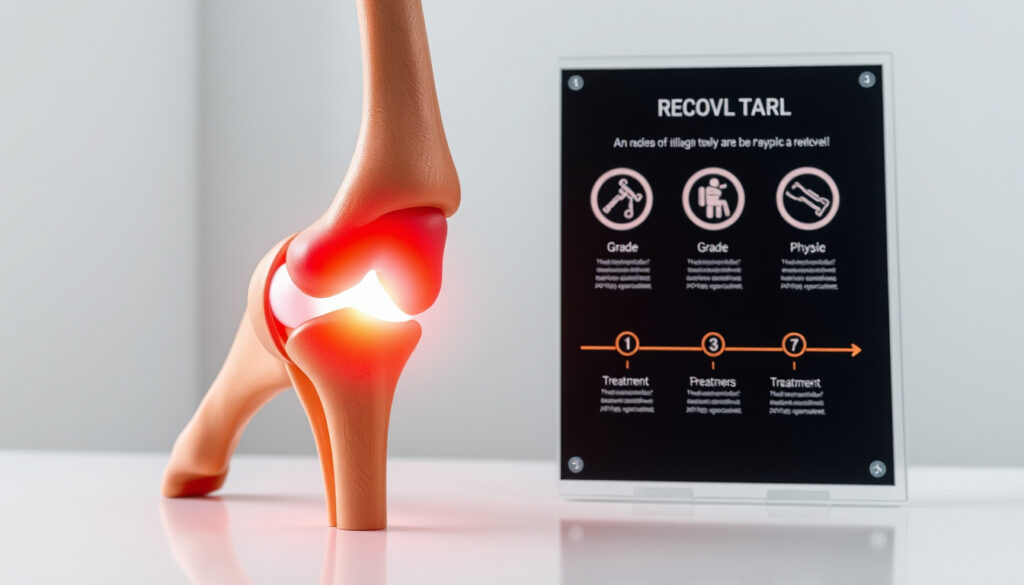
Meniscus Tear Recovery Time – Timelines by Grade and Treatment
Meniscus tear recovery time varies considerably depending on whether surgery is required, the grade of the tear, and individual factors such as age and overall health. Understanding these timelines helps patients set realistic expectations and plan their return to normal activities.
A meniscus tear is one of the most common knee injuries, affecting athletes and everyday individuals alike. The meniscus is a wedge-shaped cartilage cushion between the thighbone and shinbone, and when it tears, recovery can take anywhere from several weeks to several months.
Recovery timelines differ based on treatment approach, tear severity, and adherence to rehabilitation protocols. This guide breaks down what patients can expect at each stage of healing.
Meniscus Tear Recovery Time Without Surgery
Non-surgical recovery for meniscus tears generally requires 6 to 8 weeks with proper care. This approach is viable for many patients—less than one in four meniscal tears require surgical repair. The standard treatment plan includes RICE protocol (rest, ice, compression, elevation), passive rehabilitation exercises, and joint-stabilizing physical therapy.
For patients without surgery, age influences healing duration. A younger person with a mild tear might recover in 1 to 3 months, while someone 35 or older may need 3 to 6 months to achieve the same level of healing. Minor to moderate tears contained within the outer third of the meniscus—an area with rich blood supply—respond particularly well to conservative care.
Key Recovery Insights
- Tear location in the peripheral zone significantly improves healing potential
- Patient compliance with rehabilitation directly impacts recovery outcomes
- Physical therapy strengthens surrounding muscles and stabilizes the joint
- Age over 35 typically extends recovery duration by several weeks
- Conservative treatment avoids surgical risks while achieving symptom relief
- Blood supply to the meniscus determines natural healing capacity
| Factor | Typical Recovery |
|---|---|
| Without surgery | 6-8 weeks |
| With surgery | 6-12 weeks |
| Grade 1 | 2-4 weeks |
| Grade 2 | 4-6 weeks |
| Grade 3 | 3-6 months |
| Peripheral tears | Better healing potential |
Meniscus Tear Recovery Time With Surgery
Surgical recovery varies by procedure type. Partial meniscectomy patients typically return to normal activities within 3 to 6 weeks, though cartilage repair may extend to 3 to 6 months. Full meniscus repair requires up to 3 months for initial healing, followed by several additional weeks or months of rehabilitation and physical therapy.
The extended recovery from surgery depends on surgical complexity and commitment to rehabilitation. Most knee cartilage surgeries use arthroscopic (minimally invasive) techniques to accelerate recovery. General meniscus repair surgery typically involves 1 to 2 months of initial recovery, followed by several additional weeks or months of rehabilitation.
Surgical Procedure Comparison
- Partial meniscectomy: 3-6 weeks to return to normal activities; cartilage repair may extend to 3-6 months
- Full meniscus repair: Up to 3 months for initial healing
- General repair surgery: 1-2 months recovery, plus rehabilitation
Research suggests that meniscectomy (arthroscopic meniscus surgery) has shown limited effectiveness despite its widespread use, and people who undergo meniscal surgery are 2.5 times more likely to require total knee replacement in the future. This underscores the value of conservative treatment when appropriate.
Recovery Time by Meniscus Tear Grade
Meniscus tears are classified into three grades based on severity. Grade 1 tears involve small tears within the cartilage without affecting joint stability. Grade 2 tears are more significant but still contained within the meniscus. Grade 3 tears extend through the full thickness of the cartilage and often require surgical intervention.
Grade 1 Meniscus Tear Recovery Time
Grade 1 meniscus tear recovery time typically ranges from 2 to 4 weeks with conservative treatment. These small, localized tears within the cartilage respond well to rest, ice, compression, and elevation. Physical therapy helps strengthen surrounding muscles and prevent further injury.
Grade 2 Meniscus Tear Recovery Time
Grade 2 meniscus tear recovery time extends to approximately 4 to 6 weeks. These moderate tears often cause more persistent symptoms but can still be managed without surgery in many cases. Rehabilitation exercises become increasingly important at this stage to restore range of motion and joint stability.
Grade 3 Meniscus Tear Recovery Time
Grade 3 meniscus tear recovery time can span 3 to 6 months depending on treatment approach. These complete tears often involve mechanical symptoms such as catching or locking of the knee. Surgical repair is frequently necessary, and recovery follows the extended timeline associated with meniscus repair surgery.
Non-displaced, vertical tears in the peripheral one-third of the meniscus have a better chance of healing than other types. Tears in the outer half with good blood supply are more likely to heal within 6-8 weeks. In contrast, tears in the white-white (avascular) zone are unlikely to heal on their own.
How to Heal a Torn Meniscus Naturally
Natural healing focuses on conservative management strategies that promote recovery without surgical intervention. The RICE protocol forms the foundation of initial treatment: rest the affected knee, apply ice to reduce inflammation, use compression to support the joint, and elevate the leg to minimize swelling.
Physical therapy plays a crucial role in natural recovery. Therapists guide patients through exercises that strengthen quadriceps and hamstrings, improve flexibility, and enhance joint stability. Consistency with prescribed exercises significantly impacts healing outcomes.
Even when tears do not heal completely, symptoms often improve over time with conservative management depending on tear type and location. Many patients achieve satisfactory function through rehabilitation alone, avoiding the risks and extended recovery associated with surgery.
Regenerative Therapy Options
- Platelet-rich plasma (PRP): Injected into the meniscus using ultrasound guidance to promote healing
- Bone marrow mesenchymal stem cells: Showing clinical promise for meniscal repair
- Fibrin clots and cartilage scaffolds: Biologic augmentation methods improving repair success rates
These techniques have improved meniscal repair success rates to 75-95%, depending on tear type and location. Patients interested in regenerative options should discuss availability and appropriateness with their healthcare provider.
Meniscus Tear Brace: Does It Help Recovery?
Specialized unloader braces can potentially shorten recovery time by reducing weight on the tear. These braces are particularly useful for outer meniscus tears and are typically worn for 4 to 6 weeks. They work by shifting stress away from the damaged cartilage, creating a more favorable healing environment.
Unloader braces cost a few hundred dollars and are often covered by insurance when medically necessary. Patients should be fitted by a specialist to ensure proper alignment and effectiveness. The brace should complement, not replace, a comprehensive rehabilitation program.
Lateral unloader braces specifically address tears on the outer side of the meniscus and may help shorten recovery time when worn consistently during the initial healing phase. These devices are most effective when combined with targeted physical therapy.
Meniscus Tear Recovery Timeline: Week by Week
Recovery follows a predictable progression that varies slightly between surgical and non-surgical patients. Understanding these phases helps individuals track their progress and identify when additional medical attention may be needed.
- Weeks 1-2: Acute phase focusing on pain management, swelling reduction, and protected weight-bearing. RICE protocol continues alongside gentle range-of-motion exercises.
- Weeks 3-4: Transition phase emphasizing gradual strengthening. Physical therapy intensifies to include resistance exercises while maintaining joint protection.
- Weeks 5-6: Functional recovery phase where patients work toward normal daily activities. Proprioception exercises improve balance and joint awareness.
- Weeks 7-8: Return to activity preparation. Sport-specific or occupation-specific training begins for those with higher functional demands.
- Months 3-6: Full rehabilitation and strength building. Surgical patients continue formal physical therapy while non-surgical patients transition to independent maintenance programs.
Factors Influencing Recovery: What Affects Healing Time
Multiple interconnected factors affect healing timelines. Understanding these variables helps patients and healthcare providers set realistic expectations and optimize treatment plans.
Recovery timelines vary significantly based on tear severity, location, treatment approach, and individual healing capacity. While general guidelines provide useful estimates, each patient’s journey differs based on unique circumstances.
- Age: Older patients, particularly those 35 and above, typically require longer recovery than younger individuals
- Tear severity and complexity: Degenerative or complex tears may not heal fully but can improve symptomatically
- Tear location: Peripheral tears with blood supply heal better than central avascular tears
- Patient compliance: Adherence to rehabilitation and physical therapy significantly impacts outcomes
- Treatment modality: Surgical versus non-surgical and specific surgical technique affect timeline
What We Know vs. What Remains Unclear
| Established Information | Information That Remains Unclear |
|---|---|
| Non-surgical recovery typically takes 6-8 weeks for minor to moderate tears | Precise bruising resolution timelines |
| Surgical repair ranges from 1-6 months depending on procedure complexity | Long-term outcomes for specific regenerative therapies |
| Tear location significantly affects healing potential | Optimal duration for brace usage in all scenarios |
| Age influences recovery duration, particularly over 35 | Exact contribution of individual factors in mixed cases |
While general recovery patterns are well-established, individual variations make precise prediction challenging. Patients should maintain regular communication with their healthcare providers to adjust expectations and treatment plans as needed.
The Role of Meniscus Tears in Knee Health
The meniscus serves crucial functions in knee mechanics, including shock absorption, load distribution, and joint stability. When this cartilage is damaged, the entire knee joint compensates, potentially accelerating wear on the articular surfaces.
Understanding meniscus tear recovery time helps patients appreciate why appropriate treatment selection matters. Preserving meniscal tissue whenever possible supports long-term knee health and may reduce the risk of requiring total knee replacement later in life.
Expert Sources and Medical Perspectives
The standard treatment plan includes RICE protocol (rest, ice, compression, elevation), passive rehabilitation exercises, and joint-stabilizing physical therapy. Less than one in four meniscal tears require surgical repair.
— Orthopedic and Knee Replacement specialists
Medical consensus emphasizes conservative management as the first-line approach for appropriate candidates. Surgical intervention is reserved for cases where mechanical symptoms persist, instability affects daily function, or conservative treatment fails to provide adequate relief.
Patients benefit from seeking evaluation by orthopedic specialists who can assess tear characteristics and recommend individualized treatment strategies. According to the American Academy of Orthopaedic Surgeons, imaging studies, particularly MRI, help determine tear morphology, location, and suitability for different treatment approaches.
Summary: Key Points About Meniscus Tear Recovery Time
Meniscus tear recovery time depends heavily on treatment choice, tear severity, and individual factors. Non-surgical approaches typically require 6 to 8 weeks, while surgical recovery spans 1 to 6 months depending on the procedure performed. Grade 1 tears heal fastest, often within 2 to 4 weeks, while Grade 3 tears may require 3 to 6 months of rehabilitation.
Conservative treatment should be exhausted before considering surgery in most cases, given research suggesting increased risk of subsequent knee replacement following meniscectomy. Physical therapy, appropriate bracing, and patience form the foundation of successful natural recovery.
For those interested in complementary approaches to inflammation management during recovery, exploring Turmeric and Black Pepper Benefits may provide useful dietary context, though any supplement use should be discussed with a healthcare provider.
Frequently Asked Questions
How long does a Grade 1 meniscus tear take to heal?
Grade 1 meniscus tear recovery time typically ranges from 2 to 4 weeks with conservative treatment including rest, ice, compression, elevation, and physical therapy.
What is the recovery time for a Grade 2 meniscus tear?
Grade 2 meniscus tear recovery time extends to approximately 4 to 6 weeks. These moderate tears often respond well to non-surgical management with focused rehabilitation.
How long does recovery take for a Grade 3 meniscus tear?
Grade 3 meniscus tear recovery time can span 3 to 6 months depending on whether surgery is required and the specific rehabilitation protocol followed.
What about lateral meniscus tear recovery time?
While specific recovery timelines exclusive to lateral meniscus tears are not established, they generally follow standard timelines: 6-8 weeks for non-surgical treatment or 1-6 months for surgery, depending on tear severity.
Does torn meniscus bruising affect recovery time?
While bruising timelines are not specifically documented, symptoms including pain and swelling often improve substantially with conservative management and physical therapy over weeks to months, regardless of bruising presence.
More related posts
 Black Shoes for Women – Best Comfortable Flats
 Thierno Barry – Complete Profile and Premier League Stats
 Wilson Bethel – Biography, Height, Wife, and Daredevil Roles
 7 Stages of Grief – Order, Differences and Breakup Insights
 Emi Martinez – The Global Fight Against Childhood Anemia
 Leonardo Royal London St Paul’s – Location, Reviews and Amenities
 Marks & Spencer London Colney – Opening Hours, Phone, Parking & Cafe
 Eden Hazard – Retirement, Real Madrid Decline and Chelsea Legacy